
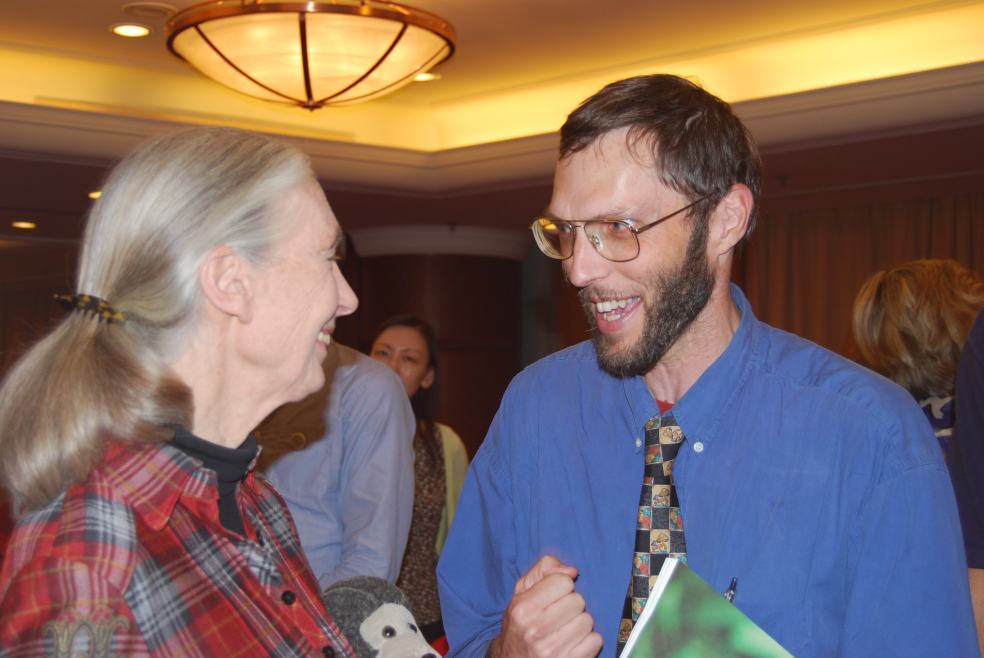
This website is run by Henricus Peters
Follow me on  click on http://twitter.com/#!/LearnFromNature
Follow me on  click on http://www.facebook.com/NAEEUK

About ‘Learn From Nature’
Humans, as regions and nations, even as individuals, share the Earth with many billions of peoples and countless other living organisms, but the latter we all too easily take for granted. We live and use earth’s resources with an attitude of near-pure exploitation, ‘as if’ it the resources of the Earth are infinite and limitless.
I believe that we can and must begin, as individuals, group and through better government – to refine what we mean by ‘sustainability and ‘share’ collective responsibility for today and plan, in real and practical ways, for this and future generations.
We believe we can work together to make a real difference, to make a better world, in which we live more sustainably. If we might just ‘learn to live – and not fight against – nature!
‘Learn From Nature’ aims to contribute news and ideas.
About the writer
Learn from Nature is run by Henricus Peters : Currently a primary teacher and writer
Background and values
- Born and raised in Canterbury, New Zealand – initially in Christchurch the site of earthquakes. I studied at Waikato University – Social Services including Geography and Education, then undertook a masters degree in Education as part of my teacher training. I am especially interested in how people of diverse cultures interact with each other and their natural and built environments – therefore geography and environmental education! After marrying Anne, traveled though Africa and Europe before living in the United Kingdom for several years. I am now teaching in Shanghai, China – so living a cultural experience!
- Believe that all life is interconnected – including mountains, rivers, down the coasts; the role of Nature in all our lives and the importance of improving our relationship with the world, especially living sustainably; getting children outdoors!
Achievements
* Consultant: Geography Association representative to Collins Resources Atlas http://www.geography.org.uk/
* Executive Board of the National Association for Environmental Education – currently Co-Chair and Managing Editor
* Writer: Regular writer for Environmental Education journal http://www.naee.org.uk/ , Geographical Association magazines, Science in Education magazine http://www.ase.org.uk/, Chesham Town Talk magazine http://www.cheshamtowntalk.org.uk/, Yellow-Eyed Trust publications http://yellow-eyedpenguin.org.nz/
* Contributing writer for NAEE’s Positive Action handbook for sustainable schools in the community http://www.naee.org.uk/
* Recipient of the Anne Swaine Award 2007 for establishing an after-school Nature Group
Interests and memberships
*Hiking, Cub scout leader in New Zealand, United Kingdom and China (Boy Scouts of America)
* National Association for Environmental Education, Royal Forest and Bird Protection Society, Yellow eyed Penguin Trust, Geographical Association, Wildlife Trusts, Marine Conservation,
ABOUT THE SITE
LearnFromNature aims to explore the world ‘about’ the environment and education… by:
~ informing – via links and useful Resources and clarifying and debating some of the those ideas
~ share ideas and opinion, using
+ twitter http://twitter.com/#!/LearnFromNature
+ facebook http://www.facebook.com/?ref=logo
 LEARN FROM NATURE
Hi. Connected with you on Twitter. Have created a connector facility on http://www.more-than-organic.com, so that schools can connect with sustainable farms directly. Direct contact with sustainable farms helps facilitate the flow of information to our young people, who will benefit most from transition to more secure food systems. I´d like to get schools intereste in this process, can you help?
Best wishes
Gavin Venn
http://www.twitter.com/morethanorganic
http://www.more-than-organic.com
Hi
It’s wonderful to hear that ‘more-than-organic’ are aiming to connect schools with sustainable farms and I am sure ‘we’ can help!
By ‘we’, I mean .. the National Association for Environmental Education UK (http://www.naee.org.uk/), of which I am an executive, is a network that promotes environmental education (EE)/education for sustainability (ESD) both formally and informally. We are very enthusiastic about projects including connecting children, esp in urban settings, with farming experiences.
I will check out your connector facility; meantime I will also let others know about it also.
Kind regards
Henricus Peters
NAEE Joint Chair and Managing Editor
http://www.naee.org.uk/
Hello Henricus, thanks so much for stopping by Modern Hippie Mag. You have a great blog here, I hope that we can collaborate in some way.
Take care,
Jaszy
Modern Hippie Mag
I’m pleased you approve! Obliged if you could RT and/or mention it? Yes, be great if we can get some linking or if I might contribute to your website/someone from ModernHippieMag writes on this blog?
Thanks for contributing!
Regards
Henricus
Hi Henricus! I am a special education teacher in San Jose, Costa Rica. About six years ago I started designing open spaces, gardens, for the students to learn outside in contact with Nature. The experience has been very positive, and I feel very happy about it. I have been trying to find in internet, about schools around the world, that give emphasis in their curriculum to bring children back to Nature, but so far I have not found any. Could you give me some ideas? I wish I could establish communication with another school in order to learn more from their experience. Thank you for your time. I like oyur blog. I am in the process of creating one too. Regards!
Great to hear from you.
Your question – about schools around the world, that give emphasis in their curriculum to bring children back to Nature – is a vitally imporatnt one, but is in my mind a BIG Question, which requires a good, thoughtful answer – or ‘a range of responses’ even! This something that will require me to think about!
If other folk to this blog have any suggestions, please do let me know/write them here!
Regards
Henricus
Hi mate
thanks for accepting on tweeter.
maybe youwant to post somehing about a huge dam(belo monte) the governmet is planning to built inthe xingu rivers.
some clearifying articlesonmy blog. the latest one was just because iam loosing my pacience
all the best
gil
Hey, I found your website doing a google search on “the oil spill”. I was trying to get recent information on it. Just letting you know how I got your site to come up.
Really appreciate you letting me known just how you found my blog site.
Regards
Henricus
Hey!
I was looking for job opportunities in UK on environmental education field specific on organic agriculture. I am from Latvia (now live in UK for a year) and want to continue my work here. I was looking for a organization or people with same goals I have to join them, that’s how I found this blog. :)
Hi Aiva
I am so very pleased indeed that you have written to us about this. Good to know this blog has a useful reach!
You do not mention your experience and/or qualifications.
If you are serious about paid or voluntary work, the best website I can suggest is: http://www.environmentjob.co.uk/.
Do please also visit – http://www.naee.org.uk/ – The National Association for Environmental Education UK are always looking for supporters and volunteers, but we cannot pay.
Thanks again for getting in touch!
Regards
Henricus
Co-Chair, The National Association for Environmental Education
Oh, I found your blog on google.com Forgot to tell.
Hi, Henricus. We have been following each other on Twitter, and I see that you are quite involved with environmental education, and nature education in general. I thought that you and your colleagues might be interested to know that I have created detailed Teacher Guides (including student activity pages) for primary grade students who are using my books. I’m not selling anything here – these guides are free, and can be downloaded from my website, http://www.seymoursimon.com. You do need to register as an adult/educator (so that kids aren’t downloading what is meant for teachers), but registration is free, and we don’t sell or share our mailing list.
If these materials can help extend your science learning activities in the UK, I’d be delighted.
Warm regards and keep up the good work,
Seymour Simon
If anyone wishes to find out about the Northern Dairy Shorthorni have the info. These cattle are kept out all year whatever the weather and thrive on a natural diet of hay silage and grass. They are able to produce good meat off grass and thus high in omega 3 fatty acids and very good for you as well as tasty.
Currently the conservation programme has got the numbers of females which occur in Uk only to 76 .
I simply want to say I am just all new to blogs and certainly savored this web-site. Probably I’m likely to bookmark your blog . You absolutely have wonderful article content. Regards for sharing with us your blog site.
Dear Henricus Peters,
My name is Erin from Article Writing Services. We have a client who would like to pay you for the opportunity to post some of their content on your website. All of the content is professionally produced and you can select from pieces relevant to your audience.
The result is you get some free, interesting content for your readers while getting paid.
In return our client is asking for one link that they specify at the bottom of the content (no porn or gambling). Feel free to contact me with any concerns or clarifications you may have.
If you would like to see some examples of our content, please email me at erin@article-writing-services.org so we can begin.
Sincerely,
Erin Wallace
Outreach Manager – Article Writing Services
erin@article-writing-services.org
Hello,
Seeing that you’re a green advocate (and blogger) I wanted to reach out and see if you were interested in an article that I recently have written. It’s on the Olympics and the steps they’re taking to go green and decrease the environmental impact that it has. While sports is something far from the topic of your blog, I think that you will find it interesting and informative, and not overwhelming on the sports content, besides a few facts on the last Olympics, it is primarily about the Olympics going Green.
I’m looking to spread awareness of the fact that even though the Olympic Games are fantastic and unifying, they are it’s quite a carbon-rich event and are not that environmentally sound.
Very interested in anything related to environment and sustainability! Yes I am happy to consider – just curious about a couple of things: how did you find me? are you on facebook or twitter?
Look forward to hearing from you with some examples of an article.
Regards,
Henricus
Many thanks for being my own coach on this issue. I enjoyed your article very much and most of all enjoyed reading the way you handled the aspect I considered to be controversial. You are always very kind to readers much like me and let me in my existence :)
Hello Henricus,
I have been following you on twitter for a while and really like what you write. I am trying to raise awareness about environmental issues via health education (eating raw, local, herbs, the connection between the health of nature and ourselfes). I provide seminars as well. I would like to integrate more of environmental issues. Thus,maybe we can cooperate somehow?
Keep up the work, greatly appreciated
Ginger
Hi Ginger
Great to hear from you and pleased you enjoy my blog!
What is your twitter name?
Yes I would be thrilled to cooperate somehow. Maybe I can mention your blog and I yours for starters? Also, perhaps I can write something re kids health and playing outdoors esp those in urban settings health – our topic at school at the moment? Just thinking out loud here…
Do keep in touch.
Best wishes
This web site is really a walk-through for all of the info you wanted about this and didn’t know who to ask. Glimpse here, and you’ll definitely discover it.
Hiya! I just want to give an enormous thumbs up for the nice data you may have here on this post. I will be coming back to your blog for more soon.
I wish to show some thanks to the writer just for rescuing me from this particular instance. As a result of checking through the the net and seeing principles which are not powerful, I believed my entire life was well over. Existing without the presence of strategies to the issues you’ve solved all through your entire guideline is a critical case, and those that might have in a negative way affected my career if I had not come across your web site. Your personal ability and kindness in maneuvering all the stuff was important. I am not sure what I would have done if I hadn’t come across such a point like this. I’m able to at this time relish my future. Thanks so much for your professional and effective guide. I will not think twice to endorse the website to anybody who would like guide about this problem.
Do you treatment if I reference part of this upon my web site if I post a reference to this website?
Thank you very much for writing this in this article
Very interesting information!Perfect just what I was searching for!
Great site! I am loving it!! Will come back again. I am bookmarking your feeds also
I am not for polluting the planet any more than anyone else is. What I am completely against is pseudo science taught as scare tactics. There is not 1 scientific experiment according to the Scientific Method that proves antrhopogenic global warming. There are no double blind studies like in real science and yet the government has granted billions of dollars for global warming research. All of this becuase of a 1 degree rise in the global temps in the last 100 years.
For the record, it is scientifically impossible for CO2 to be a greenhouse gas because it is 152% heavier than air and sinks to the ground when released. The scientists tell us with bated breath like we are on the environmental precipice that we have had an 80 PPM increase in CO after a 100 years of industrial revolution. That is 8/100,000ths of 1% To graph it at 12 marks per inch, I would have to have a graph 694 feet long and the increase would represent 3/4 of 1 inch on that graph. Can we spell trace amount?
John Wilder
Hi John
I appreciate your open and frank comments – exactly what this blog is all about. I am also relieved that you state ‘I am not for polluting the planet’ ! From there on in, I must challenge your points:
* What science are you ‘facts’ or indeed ‘opinions’ based on? Example, ‘for the record’ regarding CO2, what ‘record’.
* What do you define as ‘scare tactics’? The aerial images of glaciers that have changed over a markedly short period – decades – are very clear photographic evidence of our changing planet. If this is not the results of human activity/human-induced climate change, what then?
* The ‘graph’ would be a long one – these are global phenomenon.
Finally, an emotional and ‘anthropocentric’ argument – Is it really worth denying the possibility of climate change… If it IS happening, more skepticism will stop action for upcoming generations! These generations deserve a future, so they not?
Is it worth the risk of doing nothing?
Regards
Henricus
…
I am referring to the scare tactics by the IPCC and Al Gore’s schlocumentary documented to have numerous errors in it and forbidden to be shown in public schools in England.
Pictures can and are altered. Just like the bogus commercial called “Black Balloons”. It is a slickly produced commercial ostensibly showing black balloons being filled with CO2 and rising up into the atmopshere along with thousands of other balloons. The outright fraud fo this commercial is that they had to fill the balloons with a lighter than air gas of helium to make the balloons float.
Go to the site called Glacier Girl and see the documented evidence that it was covered in 280 feet fo ice just since 1944. That means that the Greenland ice sheet has increased in height by that much giving lie to the doctored photographs.
John Wilder
I have searched for Glacier Girl – Lockheed P-38F-1-LO Lightning World War II fighter plane? Please send me a link. Regards Henricus!
http://p38assn.org/glacier-girl.htm
Check it out
John Wilder
Thanks, am doing so!
Hello Henricus, thanks so much to shear knowledgeable stuff on my blog.(greenactivist.wordpress.com )if you want I will also post it on my blog.
thanks
Salim khan
blog.greenactivist.wordpress.com
salar_sgs@yahoo.com
Hi Salimenviro
Very happy for you to add to your blog also.
Many thanks back!
Regards
Henricus
Great blog!
Learnt a lot from the postings.
Osiman
Hey Henricus thanks for the “follow”. Hope you’ll visit HRonlinePH.com often. We are Human Rights Online Philippines and we feature articles, blogs, news information and photos on human rights in the Philippines. This site also offers current
urgent action and list of links to other human rights online resources.
You’ve got nice blog here. Looking forward to reading more from you!
Henricus
I resent you not allowing comments on your current blog post about Obama. I don’t like him and I sure don’t respect him and it has absolutely nothing to do with his race.
The polar bears are not threatened by drilling. They are thriving now that hunting them has been banned. Their population has increased from about 5,000 to 25,000. They are in absolutely no danger from drilling.
We are still in an oil economy and yes occasional accidents happen. But BP was a model citizen and cleaned up the environment. If we had a spill in ANWR it is a frozen tundra and all we would have to do is to scoop it up as there would be no ground pollution because it is all ice. They only want to drill in a tiny postage stamp sized area of millions of square miles.
Obama killed the Canadian Pipeline project. Using your liberal agenda he increased the CO2 pollution exponentially and vastly increased the cost of imported oil becuase it has to be trucked in. The pipeline is vastly cheaper and more environmentally friendly. I could go on and on here.
John Wilder
Hi John Not sure what you ‘resent not allowing comments ‘ – I am approving this one aren’t I?
Respect you do not like Obama but I think he’s better than previous presidents, in my opinion. But yes I am very worried about the impacts of exploration/exploitation of habitats . ‘BP was a model citizen’ – maybe that was what the PR machine wanted people to think?? A company like BP can buy it’s way out of tight corners…
I would challenge the suggestion that ‘The pipeline is more environmentally friendly (ier)’. There are many options!
Thanks for commenting!
Henricus
Pingback: Wildlife Update : British zoos put on alert over rising threat of rhino rustlers « Journal of an adventurous mother
Hey :) Thanks so much for the great blog. Please take a look at my piece on the Fire Walk I did at the London zoo to raise money and awareness for the Tiger SOS campaign :) Let me know what you think! xoxox Tayla
http://taylaac.wordpress.com/2012/02/28/giving-tigers-a-tomorrow/
Pingback: ‘A great silence is spreading over the natural world’ | National Association for Environmental Education
Pingback: Science blogs that I recommend | Science on the Land
Hi Henricus! Thanks so much for the trackback. If you’re a Facebook user we’d really appreciate it if you would “like” the RAXA Collective page. See you there!